


Engaging Sellers in OLX’s Transactional Model
As the product designer responsible for the seller journey at OLX, I faced the challenge of increasing adoption of the transactional sales model—encouraging sellers to migrate to this format while also generating more revenue for the company.
Problem
Why weren’t sellers adopting the transactional model?
Company context
OLX is one of the largest second-hand marketplaces in Brazil, connecting people who want to sell unused items with interested buyers. For many years, OLX operated exclusively under the classified model, in which sellers created ads and buyers negotiated directly via the platform’s chat.
To diversify revenue, OLX introduced the transactional model, in which:
The seller receives online payment, with the option for buyers to pay in installments.
Shipping is handled by OLX’s logistics partners.
A 10% fee is charged to the seller after the sale.
Despite its advantages, adoption of the transactional model—called “OLX Guarantee”—was limited, with only 32% participation after two years. My challenge was to increase adoption to 65% by the end of 2024, driving revenue growth and improving the seller experience.
Discoveries & Insights
I began the project with a deep dive into the seller journey using:
In-depth interviews to map perceptions, barriers, and motivations
Usability tests to identify friction points
Data analysis to understand behavior and usage patterns
Market benchmarking—such as Mercado Livre—to identify best practices
Key questions explored:
What was the experience like when listing and selling through the transactional model?
What were the perceptions and objections?
Why did sellers prefer the classified model?
What was the post-sale experience like?
How frequent were transactional sales?


Main findings
💎 Lack of understanding: Sellers didn’t clearly understand the model or its advantages.
💎 High perceived cost: The 10% fee felt expensive, especially for low-value items.
💎 Logistics uncertainty: The delivery process wasn’t clear.
Insights gained during the research highlighted critical barriers to adopting the transactional model:
💎 Security concerns: Fear of shipping damage or fraud, such as illegitimate returns.
💎 Preference for in-person transactions: Sellers liked receiving payment and showing the product face-to-face.
💎 Fragmented experience: The journey felt inconsistent due to multiple teams owning different parts of the process.
Solutions Implemented
Based on the findings, I implemented strategic actions to remove barriers and improve the seller's experience:
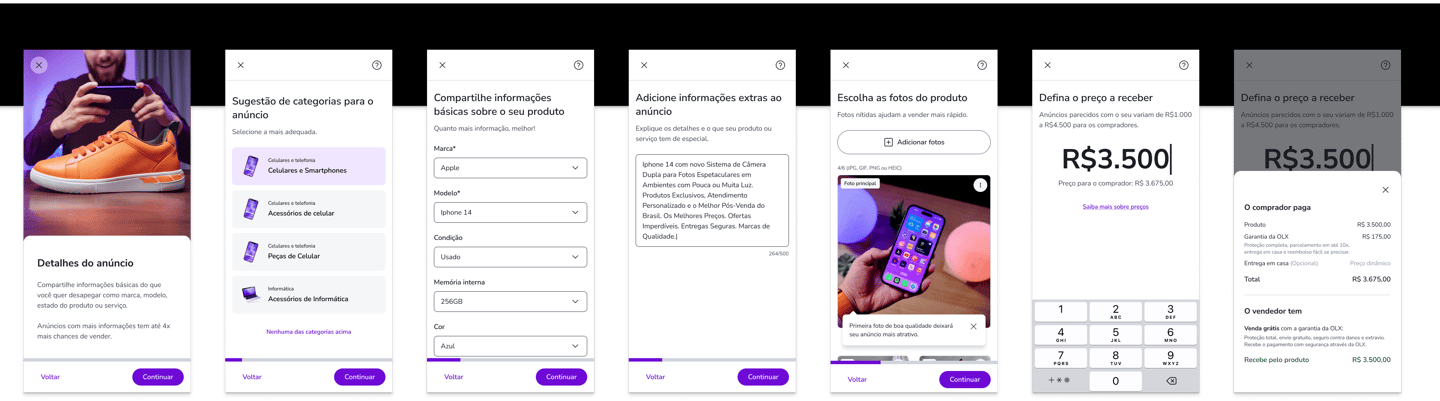
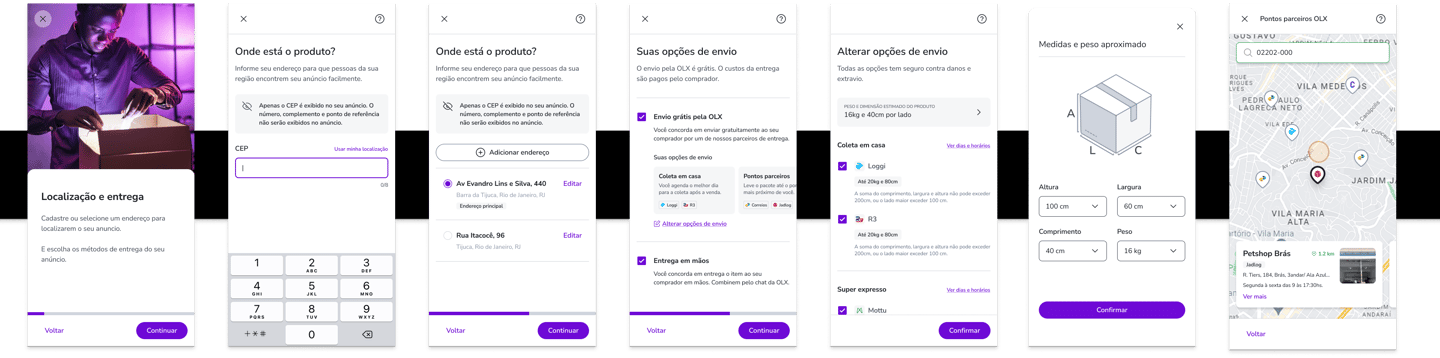
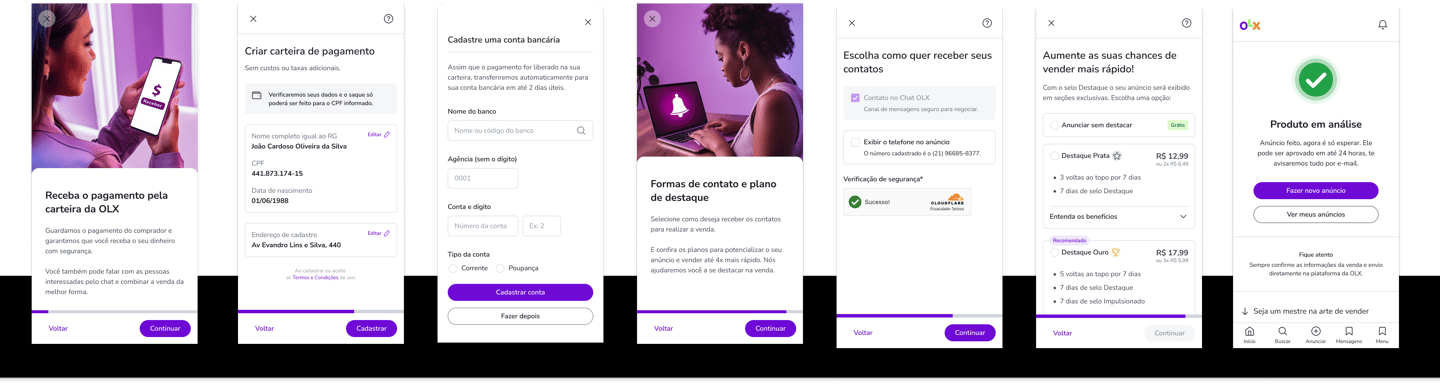
Integrated ring insertion journey
I worked together with core time to create a simpler and more fluid journey, reducing friction in the advertising process and increasing adherence to the transactional model.Clear communication about the model
I reframed communication to highlight benefits:Secure payment
Protection against loss/damage
Convenience of shipping without meeting buyers in person
Zero seller fee
With leadership support, we tested shifting the 10% fee to buyers—making the model more competitive.Logistics improvements
We added clear delivery instructions and expanded logistics partners to increase convenience and trust.Continuous A/B and A/B/C testing
We ran iterative tests to validate layout and communication changes, optimizing the journey based on metrics and user feedback.
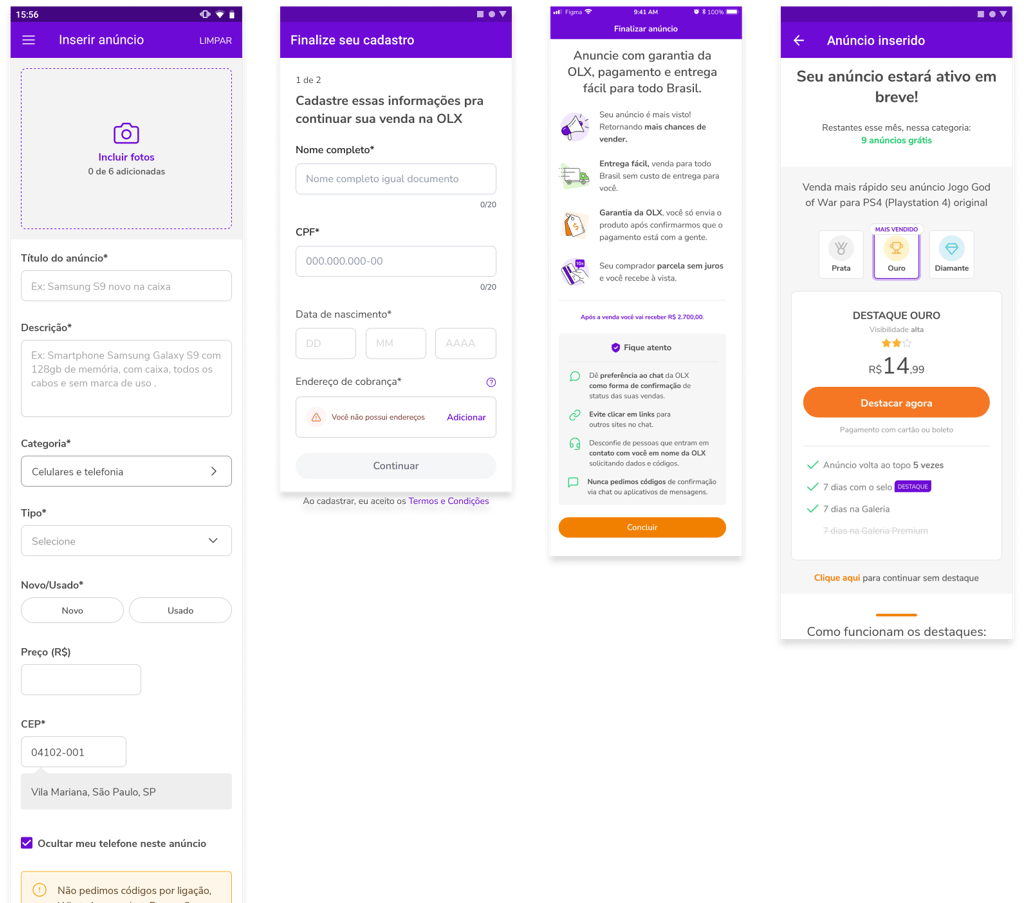
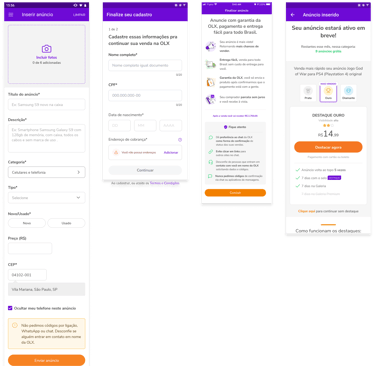
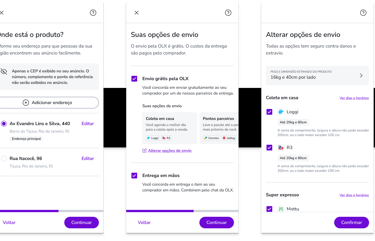
What was ad insertion like before the changes...
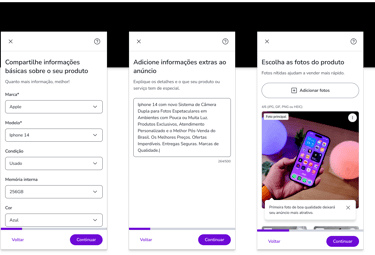
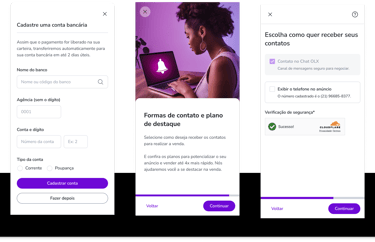
How did it look after the changes...
Results & Impact
The initiatives led to strong results, surpassing goals:
Adoption of the transactional model: Growth from 32% to 71% in 2024 (target: 65%)
Inventory increase: +2 million items/month added to the transactional flow
Tripled GMV, supporting OLX’s strategic goals
Reflections & Learnings
This project reinforced the importance of aligning design, tech, and business goals to overcome adoption barriers. Deep research and an iterative approach were crucial to creating a seller experience that delivered measurable results for OLX.
